Email approvals are fine when a handful of people approve a handful of documents and nobody ever has to prove what happened later. Switch to document approval software when approvals start to stall in inboxes, when people approve the wrong version, when more than one or two approvers are involved, or when an auditor, client or regulator could ask you to show who approved what, and when.
The real difference is not convenience. Email is a messaging tool that happens to carry attachments. Document approval software is built around the document itself: one current version, a defined sequence of approvers, automatic reminders and a tamper-evident record of every decision. If your business can tolerate the occasional lost approval, email may be enough. If a lost or disputed approval would cost you money, a client or a clean audit, it is time to move.
Why Email Approvals Work at First
Almost every small business starts with email approvals, and for good reasons:
- Everyone already has it. No new tool, login or training.
- It is flexible. You can ask anyone, about anything, in any format.
- It is fast for simple cases. One sender, one approver, one reply that says "Approved."
- It leaves some record. The reply sits in someone's mailbox, which feels like proof.
For a five-person office approving a few purchase requests a month, this is often good enough. The trouble is that approval processes rarely stay that small.
Where Email Approvals Break Down
The weaknesses of email approvals show up gradually, then all at once. Here are the failure points most teams hit.
Nobody is sure which version was approved
When a contract or policy goes back and forth as attachments, you end up with files named Contract_v3_final_JS_edits_FINAL2.docx. An approver replies "looks good" to one attachment while someone else is editing another. Weeks later, it is genuinely unclear which text was signed off. Email has no concept of a single current version, so it cannot prevent this.
Approvals stall in inboxes
An approval request is just one more message competing with newsletters, client emails and meeting invites. There is no built-in reminder, no escalation and no view of what is waiting on whom. The requester has to chase manually, and the person chasing usually has less authority than the person who is late.
The audit trail is weak and scattered
An email reply shows that a message came from an account at a certain time. It does not reliably show:
- Exactly which document content the approver saw
- Whether the file changed after approval
- That the approver was the right person under your approval policy
- The full sequence of reviews, rejections and resubmissions
That evidence also lives in individual mailboxes. To reconstruct an approval for an auditor, someone has to search several inboxes, forward threads and hope nothing was deleted.
Reply-all chaos and parallel threads
With three or more approvers, conversations split. Finance replies to one thread, legal starts a new one, and the operations lead comments on a forwarded copy. Feedback gets lost, and it is easy for a document to move forward with an unresolved objection buried in a side thread.
Turnover and access problems
When an employee leaves, their mailbox may be archived, restricted or deleted under your IT policy. Approvals they gave, or requests sitting with them, can disappear from view. Retention is also harder: if your records policy says approved contracts must be kept for a set number of years, those approvals should not depend on whether one person's mailbox survives.
Data protection concerns
Approval emails often carry personal data: employee records, customer contracts, invoices with bank details. Under GDPR in the EU and laws such as the CCPA in California, you need to know where personal data lives and be able to manage and delete it appropriately. Copies multiplied across inboxes, forwards and local downloads make that much harder. In healthcare, emailing documents that contain protected health information also raises HIPAA security questions.
Email Approvals vs. Document Approval Software at a Glance
| Factor | Email approvals | Document approval software |
|---|---|---|
| Version control | Attachments multiply; easy to approve the wrong file | One current version, with full version history |
| Routing | Manual; sender decides who to ask each time | Defined steps and approvers, sequential or parallel |
| Reminders and escalation | Manual chasing | Automatic reminders and visibility into who is blocking |
| Status visibility | Ask around or search inboxes | Dashboard showing what is pending, approved or rejected |
| Audit trail | Scattered across mailboxes, easy to lose | Centralized log of every view, comment and decision |
| Evidence of what was approved | Weak; file may change afterward | Approval tied to a specific version |
| Signatures | Typed name or "OK" in a reply | Electronic signatures with a completion record |
| Access after turnover | Depends on mailbox retention | Records stay with the document, not the person |
| Setup effort | None | Some initial configuration |
| Cost | Included in existing tools | Subscription fee |
Signs It Is Time to Switch
You do not need to switch just because software exists. Use this checklist. If three or more apply, email is probably costing you more than it saves.
- You have approved, or nearly approved, the wrong version of a document at least once.
- Approvals regularly take days because requests get buried, and someone spends time each week chasing them.
- Most approvals involve more than two people, or require a specific order, such as manager first and then finance.
- You cannot quickly answer "who approved this and when?" without searching several mailboxes.
- An audit, client review or certification requires evidence of approvals. Financial audits, ISO 9001 document control and vendor security reviews commonly do.
- You need signatures from external parties, such as clients, contractors or vendors, not just internal sign-off.
- Approval rules depend on conditions, like amount thresholds for purchase orders or invoices.
- Staff turnover has caused lost context, where approvals or pending requests vanished with a departing employee.
- Approval volume is growing faster than headcount, and the process does not scale.
When Email Is Still Fine
To be fair to email, there are situations where it remains a reasonable choice:
- Informal, low-stakes decisions, such as approving a social media post or a meeting agenda
- Single-approver requests with no compliance requirement
- Very low volume, a few approvals per month, with no external parties
- One-off decisions that will never need to be revisited
Many businesses run a hybrid: email or chat for quick informal sign-offs, and an approval system for anything with financial, legal or compliance weight. The key is to decide deliberately which documents belong where, rather than letting everything default to email.
What to Look For in Document Approval Software
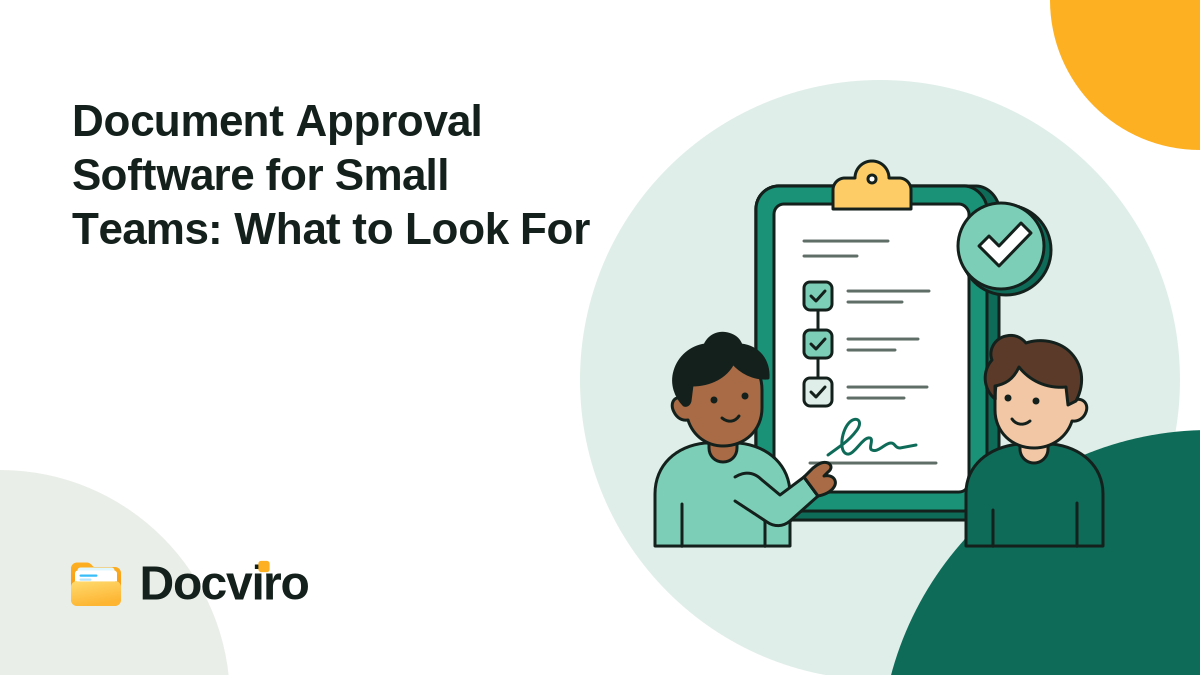
Once you decide to switch, focus on the capabilities that fix the specific problems email created. For a deeper checklist aimed at smaller organizations, see Document Approval Software for Small Teams: What to Look For.
Core approval features
- Configurable routing: sequential steps, parallel review and conditional rules, such as invoices above a set amount going to a second approver
- Reminders and deadlines: automatic nudges so requesters do not have to chase
- Clear approve, reject and request-changes actions, with comments attached to the decision
- Status tracking so anyone with access can see where a document stands
Document integrity
- Version history so approvals are tied to a specific version and earlier drafts remain available
- Locking or clear marking of the approved version to prevent silent edits afterward
Evidence and compliance
- A complete audit log of who viewed, commented on, approved or rejected each document
- Electronic signatures for documents that need a formal signature, with a record that shows signer identity, timestamps and document integrity
- Retention rules so approved records are kept as long as your policy requires, and no longer
Practical fit
- Easy for occasional approvers. Managers who approve twice a month should not need training.
- External access for clients and vendors without forcing them to create full accounts
- Permissions that limit who can see sensitive documents
- Pricing that fits your team size and does not charge heavily for occasional approvers
How to Switch Without Disrupting the Team
Moving away from email approvals is mostly a process change, not a technical one. A phased approach works best.
- Map your current approvals. List the document types that need approval, who approves each and in what order. Note where things currently go wrong.
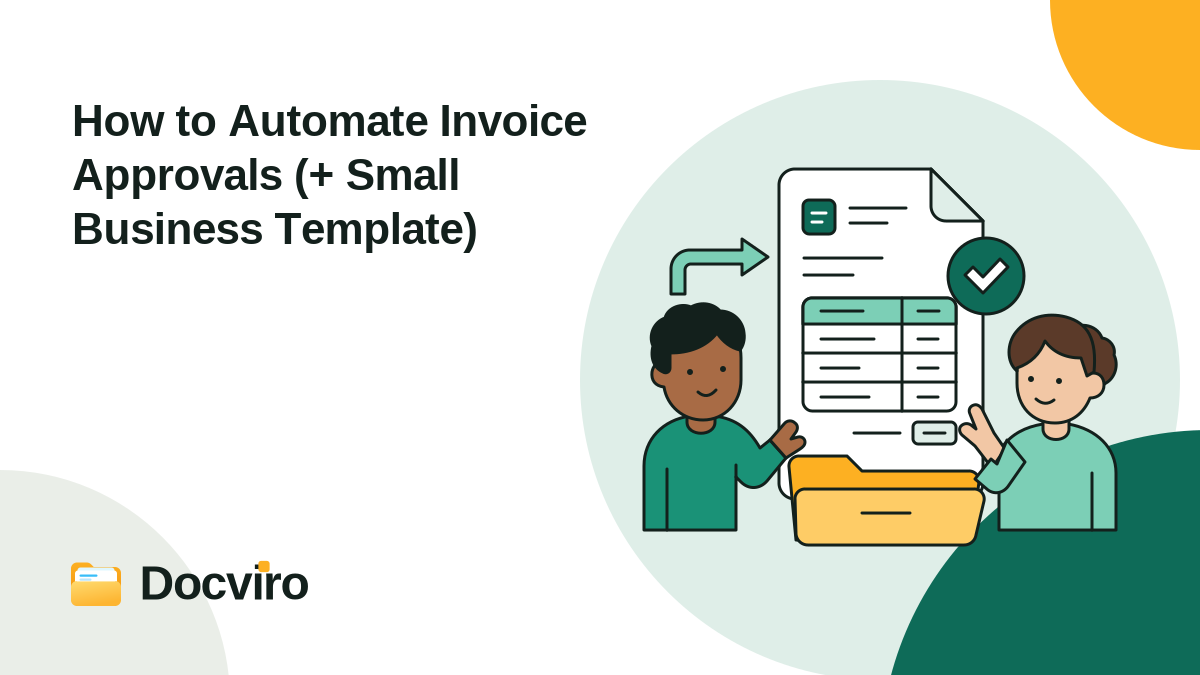
- Pick one high-pain process to start. Invoices, purchase requests, contracts and policy updates are common first candidates because the cost of errors is visible.
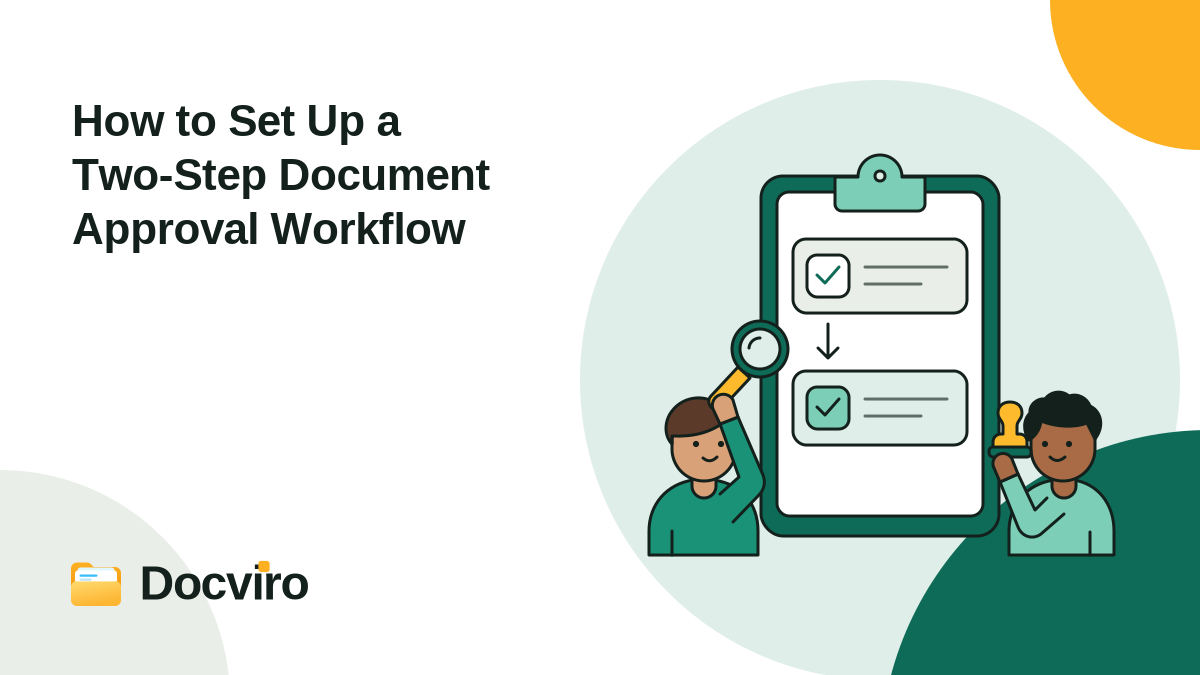
- Define the workflow on paper first. Decide the steps, approvers, backup approvers and any conditions. Keep it simple; you can add complexity later. A two-step document approval workflow is a good starting template for most teams.
- Configure and test with a small group. Run a handful of real documents through the new process and fix anything confusing.
- Set a clear cutover rule. For example: from a given date, invoices approved by email will not be paid. Without a rule, people drift back to old habits.
- Migrate only what you need. Bring over in-progress items and documents you must retain. You rarely need to import years of old email threads; export and archive them according to your retention policy instead.
- Expand process by process. Once the first workflow runs smoothly, add the next document type.
Common mistakes to avoid: building overly complex workflows on day one, not naming backup approvers for vacations, and failing to tell external parties how the new process will work for them.
How Docviro Handles Document Approvals
Docviro is built to replace email-based approvals with a structured process that keeps the document, the decision and the evidence in one place.
- Approval workflows: You define the steps and approvers for a document or folder, and Docviro routes each document through them, so approvers act on the document itself rather than an attachment. See workflow automation for details.
- Version history: Every change creates a new version, so it is clear which version was approved and earlier drafts remain available for reference.
- Electronic signatures: When a document needs a formal signature, internal or external signers can sign electronically. Each completed signature produces a certificate of completion, and a public verification page lets third parties confirm the signed document's authenticity. Learn more on the electronic signature page.
- Audit logs: Docviro records actions on documents, including views, edits, approvals and signatures, so you can answer who approved what and when without searching inboxes.
- Secure sharing: Instead of emailing attachments, you can share documents through links with permissions and expiration dates.
- Permissions and retention rules: Folder permissions control who can see sensitive documents, and retention rules help keep approved records for the period your policy requires.
- Search and AI tools: Full-text search with OCR, AI summaries and metadata extraction make it easier to find approved documents later, including scanned files.
FAQ
Is an email reply saying "approved" legally valid?
It can be. In the US, the ESIGN Act and UETA generally give electronic records and signatures the same legal effect as paper, and in the EU, eIDAS says electronic signatures cannot be denied legal effect solely because they are electronic. The harder part is proving who approved, what exact content they saw and that nothing changed afterward. Dedicated approval and e-signature tools make that evidence much easier to produce.
How many approvals per month justify switching to software?
There is no fixed number. Complexity and risk matter more than volume: a business with only ten approvals a month may still need software if those are contracts with external signers or audited financial approvals. If you are regularly chasing approvals or struggling to prove past decisions, the volume is already high enough.
Will approvers need training on document approval software?
Most modern tools are designed so occasional approvers can act from a notification link with little or no training. The people who configure workflows need a bit more familiarity. A short walkthrough and a written one-page guide usually cover the rest.
Can we keep using email for some approvals after switching?
Yes, and many teams do. Keep email or chat for informal, low-stakes decisions, and route anything with financial, legal or compliance weight through the approval system. Write down which document types belong where so the rule is clear to everyone.
What should we do with old approval emails?
You usually do not need to import them into the new system. Export the threads that document important approvals, store them with the related records and apply your retention policy. Delete what you no longer need to keep, especially messages containing personal data.